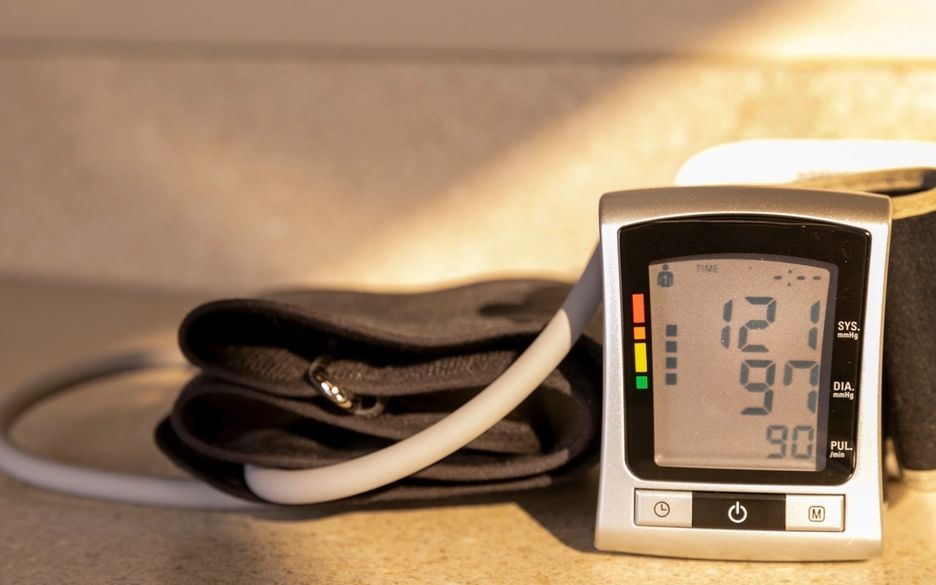
What the two numbers mean
A reading such as 128/78 mmHg has two parts. The systolic pressure (128) is the peak pressure in your arteries when the heart contracts. The diastolic pressure (78) is the pressure between beats, when the heart relaxes. Both are measured in millimetres of mercury (mmHg).
Blood pressure categories (adults)
When the two numbers fall into different categories, the higher category applies. American and European guidelines use different cut-offs:
| ACC/AHA 2017 category | Systolic | Diastolic | |
|---|---|---|---|
| Normal | below 120 | and | below 80 |
| Elevated | 120–129 | and | below 80 |
| Stage 1 hypertension | 130–139 | or | 80–89 |
| Stage 2 hypertension | 140 or higher | or | 90 or higher |
| Hypertensive crisis | above 180 | and/or | above 120 |
| ESC 2024 category | Systolic | Diastolic | |
|---|---|---|---|
| Non-elevated | below 120 | and | below 70 |
| Elevated | 120–139 | or | 70–89 |
| Hypertension | 140 or higher | or | 90 or higher |
The European threshold for diagnosing hypertension (140/90) is the one used by most countries and by the World Health Organization. The American guideline starts at 130/80, so the same reading can be "stage 1 hypertension" in the US and "elevated" in Europe.
Worked examples
| Reading | ACC/AHA 2017 | ESC 2024 | MAP | Pulse pressure |
|---|---|---|---|---|
| 112/68 | Normal | Non-elevated | 82.7 | 44 |
| 118/72 | Normal | Elevated | 87.3 | 46 |
| 128/78 | Elevated | Elevated | 94.7 | 50 |
| 134/86 | Stage 1 | Elevated | 102.0 | 48 |
| 150/85 | Stage 2 | Hypertension | 106.7 | 65 |
| 185/115 | Hypertensive crisis | Hypertension | 138.3 | 70 |
Note 120/80: the systolic 120 alone would be "elevated", but the diastolic 80 puts it in stage 1 under the American guideline. Under ESC 2024 it is "elevated".
Mean arterial pressure and pulse pressure
Mean arterial pressure (MAP) ≈ diastolic + (systolic − diastolic) ÷ 3
Pulse pressure = systolic − diastolic
MAP estimates the average pressure pushing blood through the organs over one heartbeat; for 120/80 it is about 93 mmHg. Clinicians often look for a MAP of at least about 65 mmHg in hospital settings. Pulse pressure is typically around 40 mmHg; a persistently wide pulse pressure, which becomes more common with age as arteries stiffen, is something to mention to a doctor.
How to measure blood pressure correctly at home
- Avoid caffeine, smoking and exercise for 30 minutes beforehand, and empty your bladder.
- Sit with your back supported and feet flat on the floor for 5 minutes, without talking.
- Rest your arm on a table so the cuff is at heart level, on bare skin.
- Use a validated upper-arm monitor with the right cuff size; a cuff that is too small reads high.
- Take two or three readings one minute apart and record the average. Repeat morning and evening for several days.
Readings in a clinic are often higher than at home because of the "white-coat" effect, which is why guidelines recommend home or 24-hour ambulatory measurements to confirm a diagnosis.
Low blood pressure
A reading below about 90/60 mmHg is often described as low (hypotension). For many healthy people this is normal and harmless. It becomes a concern if it causes dizziness, fainting, blurred vision or confusion, or if it drops suddenly.
This calculator classifies a single reading for adults. It is not a diagnosis. Blood pressure varies from minute to minute, and treatment decisions depend on repeated measurements and your overall cardiovascular risk. Talk to a health professional about your results.
Lifestyle steps that lower blood pressure
Guidelines from the WHO, the American Heart Association and the European Society of Cardiology agree on the main lifestyle measures, which help at every level of blood pressure:
- Eat less salt. The WHO recommends less than 5 g of salt a day (about one teaspoon). Much of it comes from bread, processed meat, sauces and ready meals.
- Move more. At least 150 minutes a week of moderate activity such as brisk walking or cycling.
- Keep a healthy weight and waist size. Losing even a few kilograms can lower blood pressure.
- Limit alcohol and avoid tobacco.
- Eat more vegetables, fruit, pulses and whole grains, as in the DASH eating pattern, which is rich in potassium.
Medication may be needed as well, depending on your readings and overall risk. Never stop or change medicine without speaking to your doctor.
Keeping a blood pressure log
Write down the date, time, both numbers and heart rate for each reading, plus anything unusual such as stress, poor sleep or a missed dose. Bring the log, or the monitor's memory, to appointments. Averages over a week tell a clinician much more than one reading taken in the surgery.
Frequently asked questions
What is a normal blood pressure?
Under the American guideline, normal is below 120/80 mmHg. The European 2024 guideline calls below 120/70 non-elevated.
Is 130/80 high blood pressure?
In the US (ACC/AHA 2017) it is stage 1 hypertension. Under European and WHO thresholds, hypertension starts at 140/90, so 130/80 counts as elevated.
Which number is more important, systolic or diastolic?
Both matter, and the higher category of the two applies. After about age 50, systolic pressure is the stronger predictor of heart disease and stroke.
When is blood pressure an emergency?
A reading above 180/120 that stays high after a few minutes of rest needs prompt medical advice. With chest pain, shortness of breath, weakness, or vision or speech problems, call emergency services.
How much salt is too much for blood pressure?
The WHO recommends less than 5 g of salt a day for adults, about one level teaspoon, including the salt already in food.
Sources
- Whelton PK et al. 2017 ACC/AHA Guideline for the Prevention, Detection, Evaluation, and Management of High Blood Pressure in Adults. Hypertension, 2018.
- McEvoy JW et al. 2024 ESC Guidelines for the management of elevated blood pressure and hypertension. European Heart Journal, 2024.
- World Health Organization, Hypertension fact sheet.
- American Heart Association, Monitoring your blood pressure at home.
Last reviewed 6 October 2026. Results are estimates; see our disclaimer.